
What We're Tracking on Climate in 2026
Welcome back to Data for Climate Progress — your one-stop shop for all things climate at Data for Progress.



Welcome back to Data for Climate Progress — your one-stop shop for all things climate at Data for Progress. Catch us here every month for our latest climate polling, juicy insights, and can’t-miss reading lists.
As always, we’d love to hear from you — drop us (Grace Adcox and Catherine Fraser) a line at gracea@dataforprogress.org and catherine@dataforprogress.org. Forwarded this email? You can subscribe below.
Love this newsletter? Want to support our work? Donate here:

Three Focus Groups on Battery Storage in California
In late January, Data for Progress’ Grace Adcox, Anika Dandekar, and Charlotte Scott made a quick jaunt out west to hold focus groups in Santa Cruz, Fresno, and Orange and Ventura counties, California.
The groups aimed to understand how Californians in areas of the state where proposed and existing battery storage projects are rapidly proliferating view such projects, particularly in the wake of the Moss Landing fire and with rising opposition to battery storage.

Interested in focus groups? Curious about DFP’s qualitative research offerings? Learn more here or drop us a line.
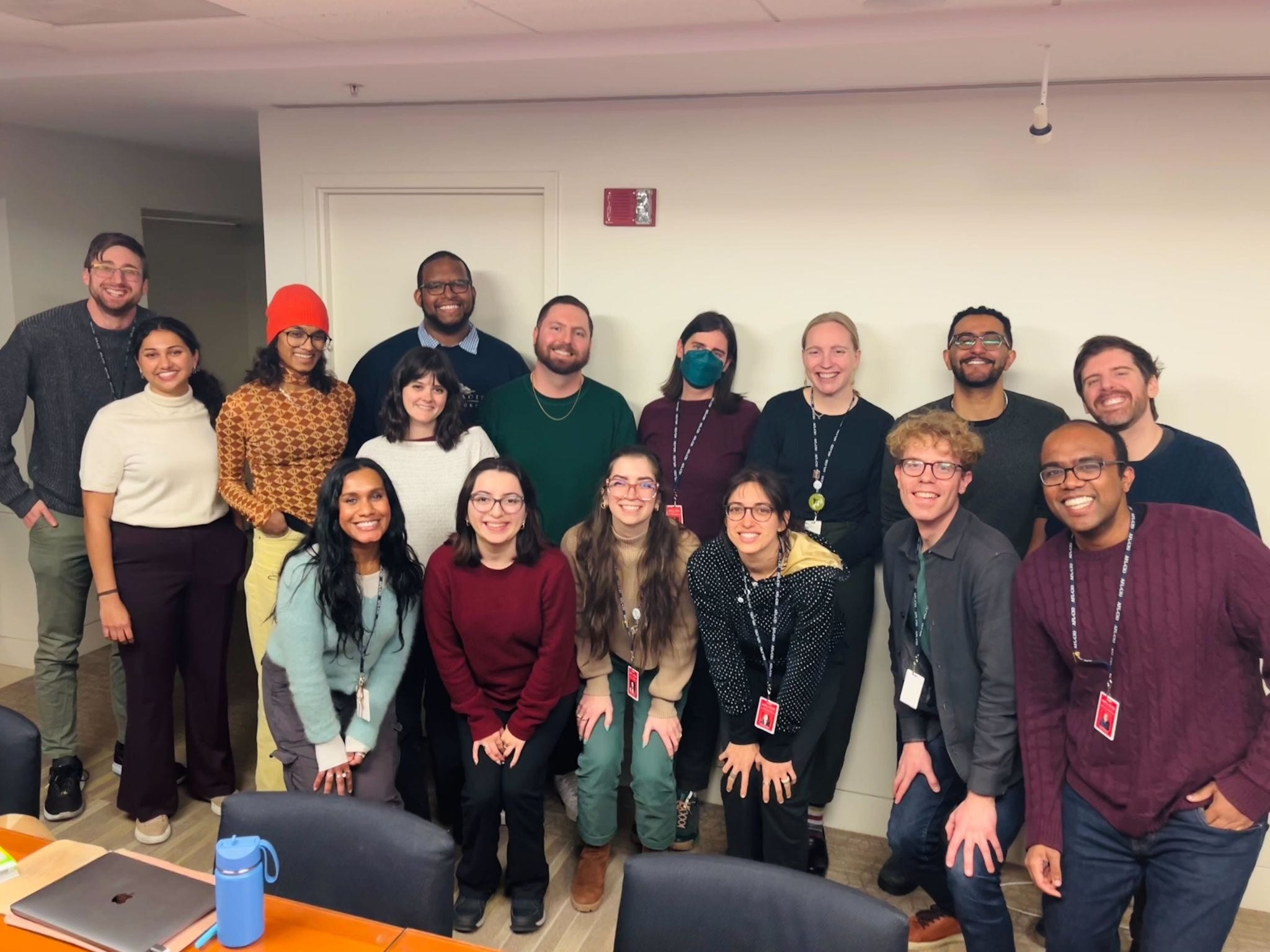
2026 DFP Staff Retreat ✅
While we’ve been away from the climate newsletter, we’ve been hard at work planning out how Data for Progress will advance progressive priorities in 2026 and onward since meeting for our annual staff retreat in February. Here’s to another year of delivering the progressive movement with the tools it needs to win by measuring — and moving — public opinion.

Voters Want New Federal Investment in Housing and Infrastructure
New DFP polling finds broad public support for the government to take a more active role in supporting new economic development, with a strong majority of voters (71%) believing the federal government should take a more active role in shaping the U.S. economy. In fact, voters support the federal government taking a more active role in growing infrastructure projects (81%), housing (80%), transportation networks (74%), and clean energy projects (72%) in their community. And, as members of Congress consider different policies that would make it faster to undergo the review and approval processes for different types of energy projects, a plurality of voters (43%) say “the government should speed up these processes only for renewable energy projects like wind and solar, but not for fossil fuel energy projects, like oil and gas,” while 38% say “the government should speed up these processes for all types of energy projects.” Read the full brief here.

What We’re Tracking (and Whom We’re Reading) in 2026
Hello, dear readers. We’re starting off the first newsletter of the year by sharing some musings on current trends in the climate discourse that we’re following and by spotlighting who we’ll be reading to make sense of it all. If the first two months of 2026 are any indication, it should be quite a year. Without further ado, here are three trends we’re tracking in 2026:
1. Data centers, data centers, data centers.
We expect data centers to continue to dominate the discourse on energy demand, grid reliability, and affordability. We’ll be following these threads and thinkers:
After last year’s release of Advait Arun’s blockbuster report, “Bubble or Nothing: Data Center Project Finance,” we’ll be closely watching to see if the AI bubble bursts. And following Arun and the Center for Public Enterprise’s work. You can find Arun and CPE on X.
With backlash to data center buildout constantly in the news, we’ll be curious to see how opposition to data center siting develops throughout the year. On that front, Jael Holzman at Heatmap News is 1 of 1 when it comes to reporting on the opposition to data centers and clean energy across the country. You can follow her work via her newsletter, The Fight, and on X.
And, finally, we’ll be tracking how voter sentiment and awareness of data centers changes this year. Last year, we published polling with WE ACT for Environmental Justice, finding that nearly half of voters (45%) said they haven’t heard enough to formulate an opinion on data centers.

What’s more, 62% of voters said they’d heard “nothing at all” about the construction of these facilities in their state. We’ll keep an eye on attitudes toward data centers this year and will keep you updated!
2. The economy and rising costs.
It’s no secret that the rising cost of living and affordability is front of mind for pretty much everyone right now, and we’re partnering up with our friends at Climate and Community Institute to continue our joint Popular Solutions newsletter, where we’ll advance green economic populism and explore popular climate policies that get at the heart of the cost-of-living crisis.
We’ll also be keeping a close eye on the economy this year via our friends at Common Wealth, who launched a new monthly newsletter, Forces of Production, last month. Forces of Production will “provide monthly tracking on the supply side data of the U.S. economy … to contribute a public image of the supply side to support and sharpen ongoing conversations about industrial policy, public ownership, and new approaches to holding down the cost of living.”

For those of us who struggled through college macroeconomics (ahem – that’s me, Catherine), the newsletter will be mandatory reading to make sense of the economy and how we meaningfully address the cost-of-living crisis. Read the first issue of Forces of Production and subscribe here.
3. Climate policy under new New York City Mayor Zohran Mamdani.
For our team, Zohran Mamdani’s victory in the NYC mayoral race ranks in the top five moments of 2025. We’re eager to see how his first term plays out, particularly his commitments on municipal grocery stores, housing, and public transit.

We’ll be closely following the work of the New York City Policy Forum, a new initiative from Phenomenal World, Climate and Community Institute, and the Fiscal Policy Institute focused on key issues facing NYC. They’ve already released essential pieces on governance in NYC, and we especially recommend JW Mason’s piece on affordable housing. Follow and subscribe to NYCPF.

“The Real Cost of Affordable Housing,” by JW Mason (New York City Policy Forum)
From our very own, Catherine Fraser, with Noah Gordon: “Capitalists Want You to Stop Worrying About Climate Change” (Jacobin)

